Flower seeds Perennial tea and culinary herbs
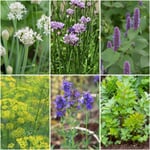
Flower seeds Perennial tea and culinary herbs
- For sowing: 6 perennial tea and culinary herbs
- Robust, easy to care for, insect-friendly
- Even for difficult locations: defy cold, drought
General Information
Discover singular products that may remind you of items you already know and appreciate; however, these products – exclusively available from us – feature a refined design meeting our clear-cut requirements.
The package contains:
Aniseed scented nettle
(Agastache foeniculum)
A vigorous, flowering perennial with spicy, aniseed-scented leaves that are used as a tea when dried (they are said to have an anti-inflammatory effect) or can be used in the kitchen to enrich the flavor of fish dishes in particular. The plant grows to a height of up to 1 m and bears large, purple flower bulbs throughout the summer, which are a lush feast for insects for months.
Spice fennel
(Foeniculum vulgare var. dulce)
An extremely decorative plant from which both the fine, feathery leaves and the sweet, aromatic seeds can be used. Fennel tea is known to have a soothing effect on flatulence and stomach problems, but fennel is also used in salads, for pickling cucumbers and in soups. The loosely growing plant grows to a height of around 1.5 m and bears eye-catching, fragrant yellow umbels from July to September, which provide plenty of food for many insects. With its graceful growth habit, fennel also enhances any herbaceous border. In very cold locations, the plant should be protected from the winter with foliage.
Edge leek
(Allium angulosum)
A relatively unknown leek with flat leaves and pink to light purple flowers. Both are ideal for seasoning salads, soups, sauces or dips and taste just as good sprinkled on bread and butter as chives. The robust, sturdy plants are well suited for edging beds in the vegetable garden and also cut a fine figure as an ornamental plant with their month-long flowering period from June to September. This leek is native to Germany, but is now very rare; the species we offer is classified as "endangered" and is on the Red List. Planting it in the garden therefore makes an important contribution to its conservation. In its natural habitat, wild garlic is found in floodplains, so it can also tolerate damp soil in the garden.
Hyssop
(Hyssopus officinalis)
Hyssop is an aromatic, slightly bitter herb with a hint of mint and aniseed that goes perfectly with hearty lamb or beef dishes or stews, fresh or dried, but also with salads, herb quark or desserts. Small bunches of cut shoots can be hung in the room as fragrant bundles. From July to October, the bright blue-violet flower spikes provide plenty of pollen and nectar for many wild bees. The tough plants can withstand cold, drought and heat, but it is important that they are not too close together so that they can develop into small bushes up to 60 cm wide and tall. With its resistance to pruning, this winter-green semi-shrub (the lower part of the plant is woody, the upper part is herbaceous) is also ideal for creating a low hedge as a border.
Chives
(Allium tuberosum)
The flat leaves of this leek are used like chives, but also have a fine garlic aroma. Suitable for salads of all kinds, for egg dishes, potato dishes, dips and herb quark or for sandwiches; even the beautiful white flowers are edible. The plant grows to about knee height and flowers mainly in August and September, occasionally as early as July. The star-shaped, pure white, fragrant flower umbels are then an important late food source for numerous insect species.
Lovage
(Levisticum officinale)
Also known as "Maggi herb", this spice plant is one of the largest in the garden; it can reach up to 2 m in height. The leaves can be harvested fresh from spring to late fall and dried throughout the winter. With their strong, spicy flavor, they enrich soups, stews and meat dishes. The seeds are also suitable for seasoning bread and other savory baked goods.
Product Information
Article Number 219880
- For sowing: 6 perennial tea and culinary herbs
- Robust, easy to care for, insect-friendly
- Even for difficult locations: defy cold, drought
This small assortment of herbs contains 6 species that are suitable for both tea and seasoning in the kitchen. But these are not the only benefits: The wonderfully ornamental flowers provide rich food for many insects; wild bees, for example, including the bumblebee, or hoverflies, which are excellent aphid hunters. What's more, the plants are perennial, so they will remain in your garden for many years and grow more and more lush over time.
Have a question?
If you have a question concerning this product you are welcome to contact us. For this your E-Mail program will open.


Contact Us
For advice, spare parts or special requests - our customer service will take care of your questions and concerns, personally and competently.
You can reach us from Monday to Friday at +49 2309 939095 or anytime at info@manufactum.com


Exclusive at Manufactum
Several particularly noteworthy products from selected manufacturers are available from us in a distinct form. In any case, these special editions offer you a maximum of quality in material and functionality.
Find exclusive products