The Raised Bed: Intensifying Gardening with Natural Methods


Especially in tight spaces—whether on a balcony, patio, or in the garden—the traditional gardening technique of raised beds offers a way to naturally intensify gardening and multiply the harvest without the need for additional fertilizer —simply through the faster warming of the soil, the constant but moderate humus-producing decomposition within it, and protection from pests such as snails or voles. Raised beds should be constructed systematically—from coarser prunings to a layer of humus.
The concept of raised beds and their benefits
A raised bed is an elevated growing area in a vegetable garden, on a patio, or on a balcony. It is usually box-shaped and can be made from a wide variety of materials: wood, metal, stone, plastic, or woven elements made of willow or hazel rods lined with plastic sheeting.

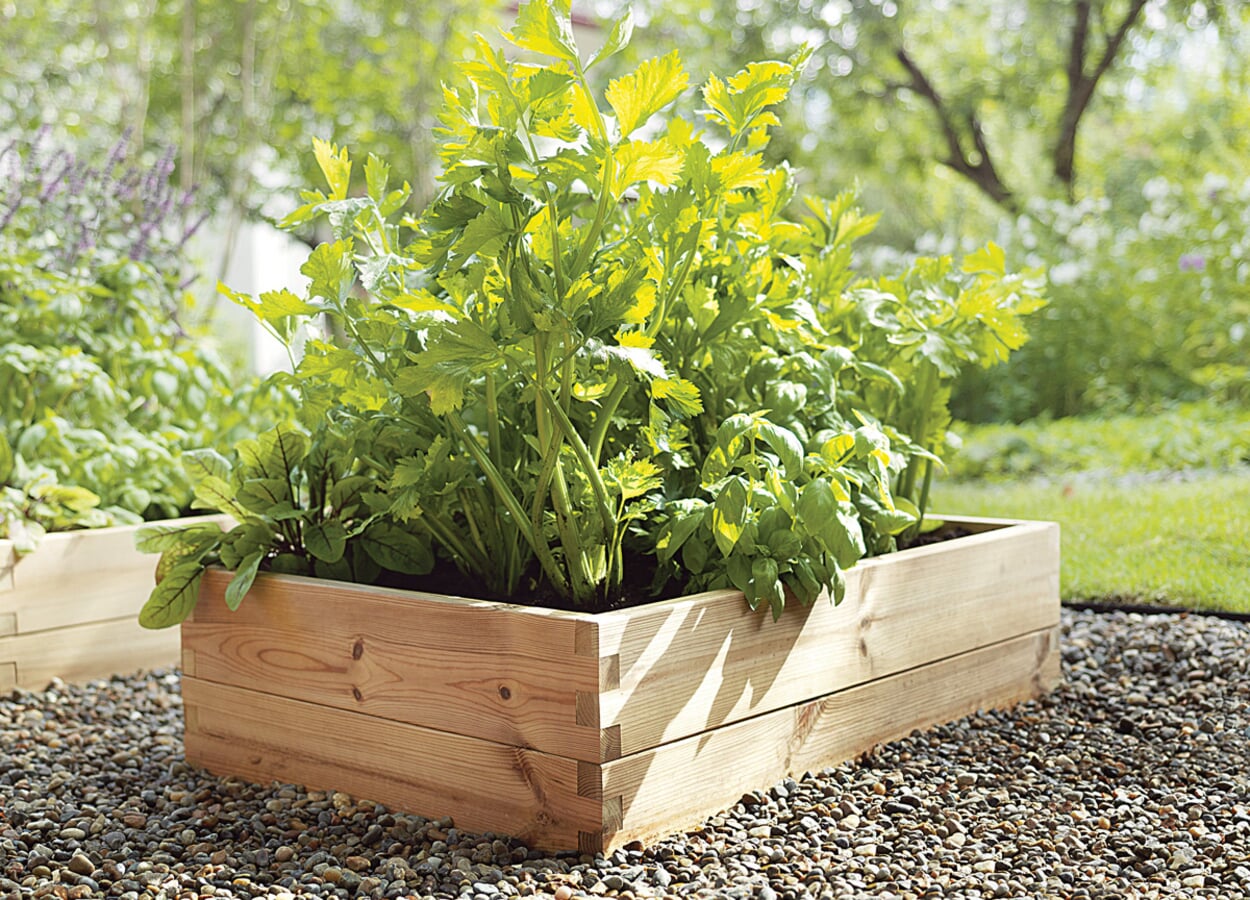
Pine wood flower bed edging

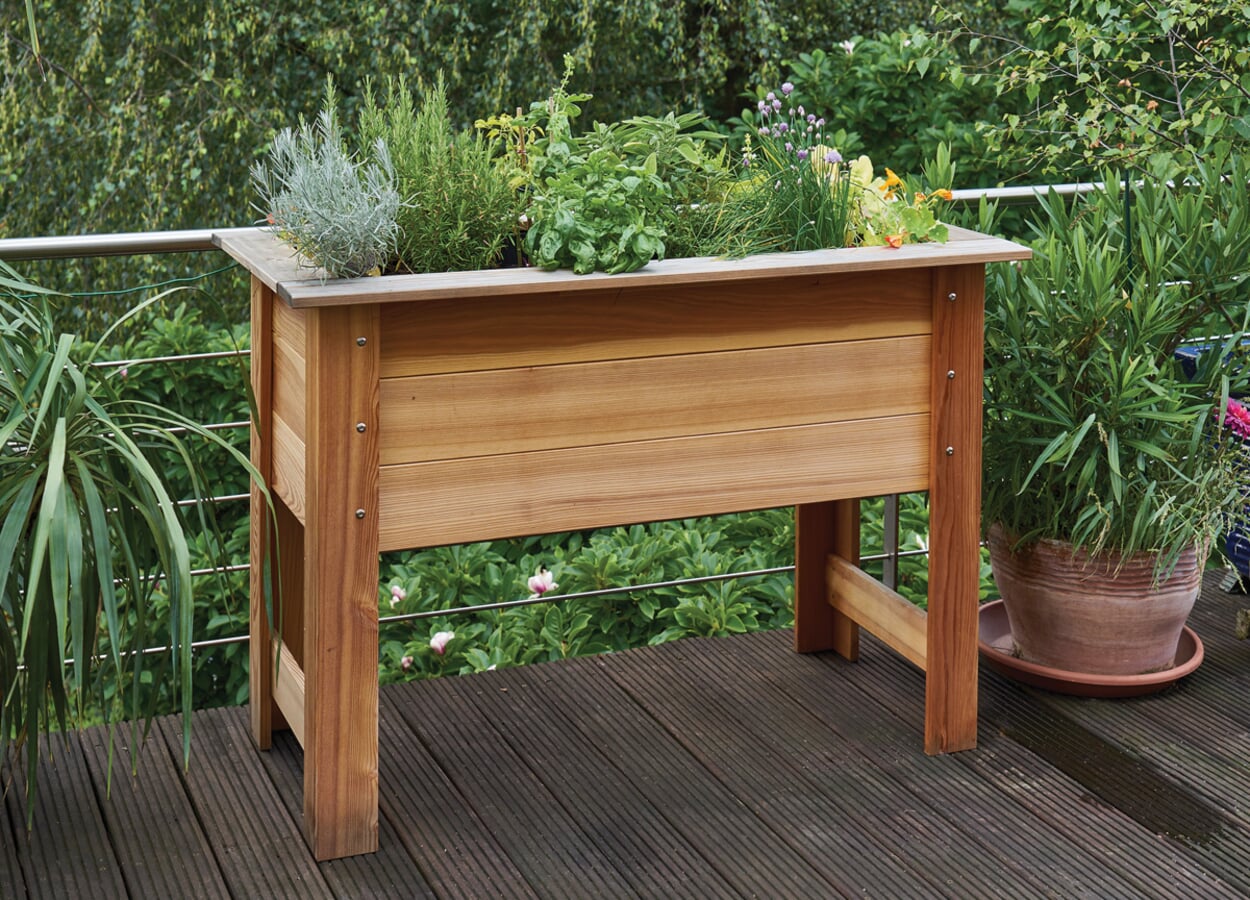
Larch wood balcony raised garden bed

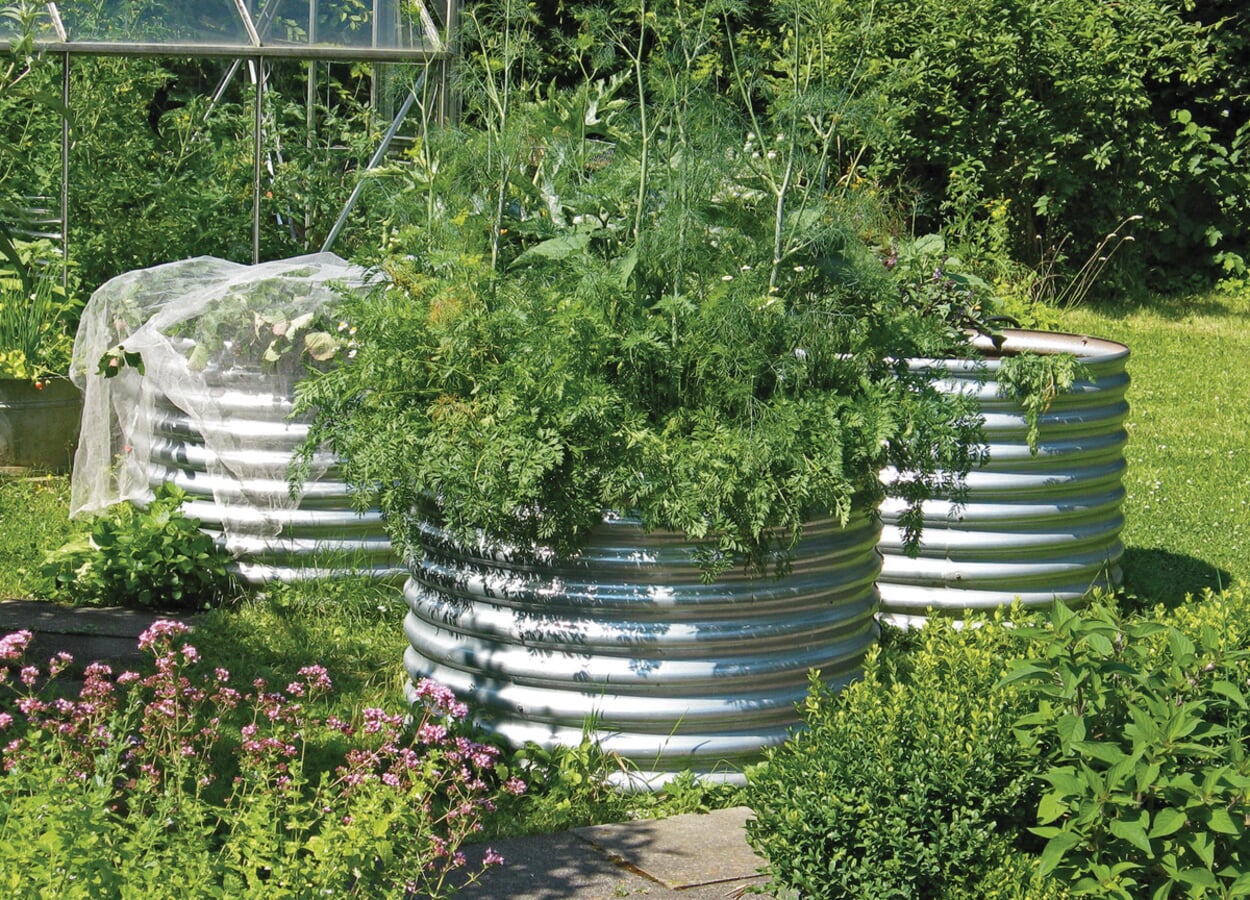
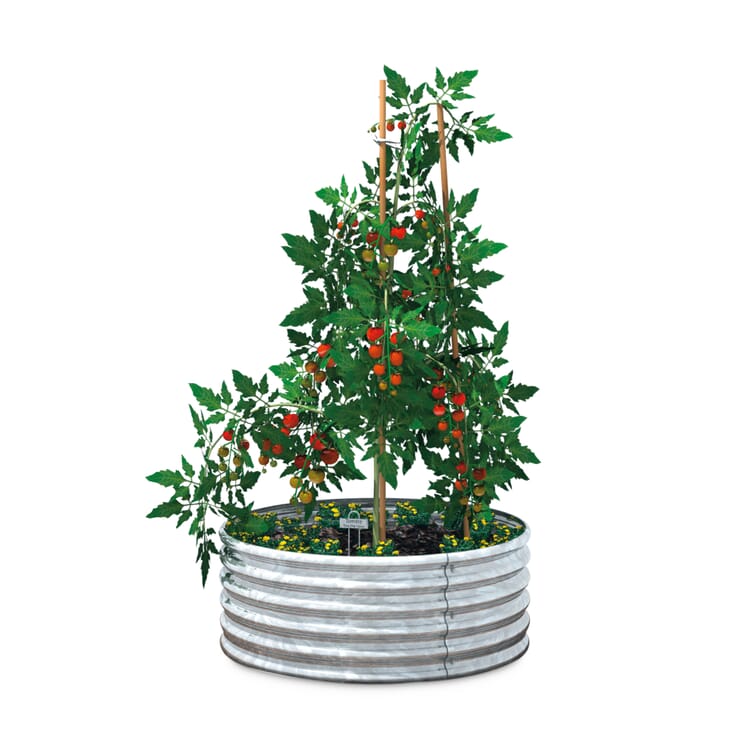
Corrugated sheet metal, hot-dip galvanized on both sides
- Higher crop yields thanks to the exceptionally high-quality growing medium that can be achieved in a raised bed, regardless of the local soil conditions. When filled properly, composting processes continuously take place inside the raised bed, resulting in a steady flow of nutrients and increased temperature.
- Therefore, additional fertilization is not necessary—or only to a very limited extent
- Pest infestations are easier to control, and the risk to plants from snails is significantly lower. Voles can be completely kept at bay.
- Thanks to the heat generated by composting inside the raised bed, you can start gardening (planting) early in the year; the growing season also lasts longer than in a ground-level garden bed.
- The working height allows you to maintain an upright posture that is easy on your back and knees, or even to work while seated.
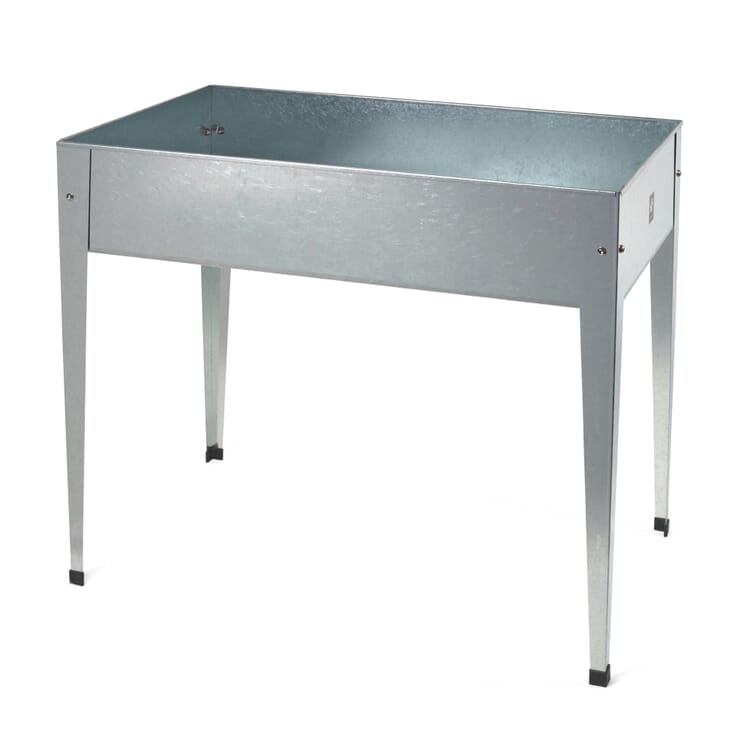
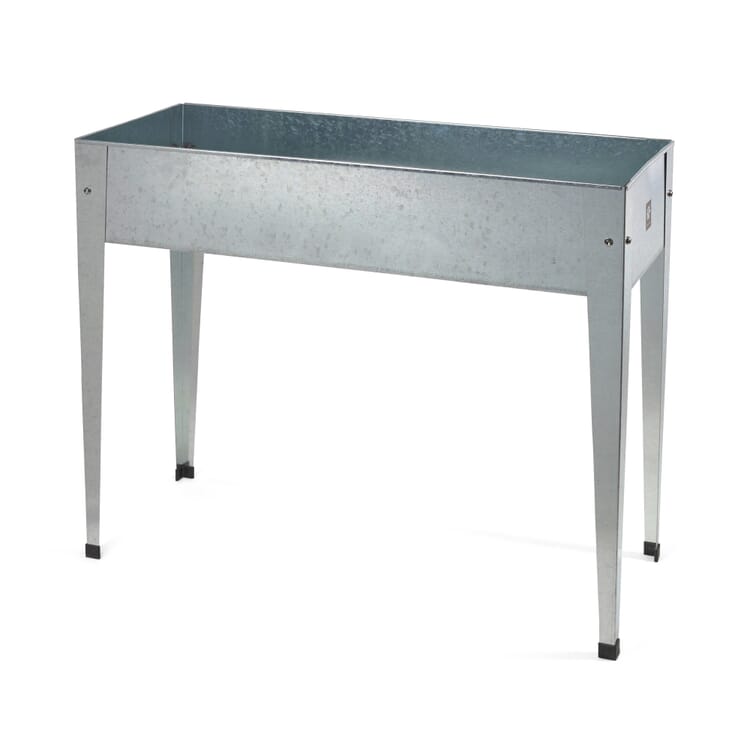
An Overview of Our Raised Beds




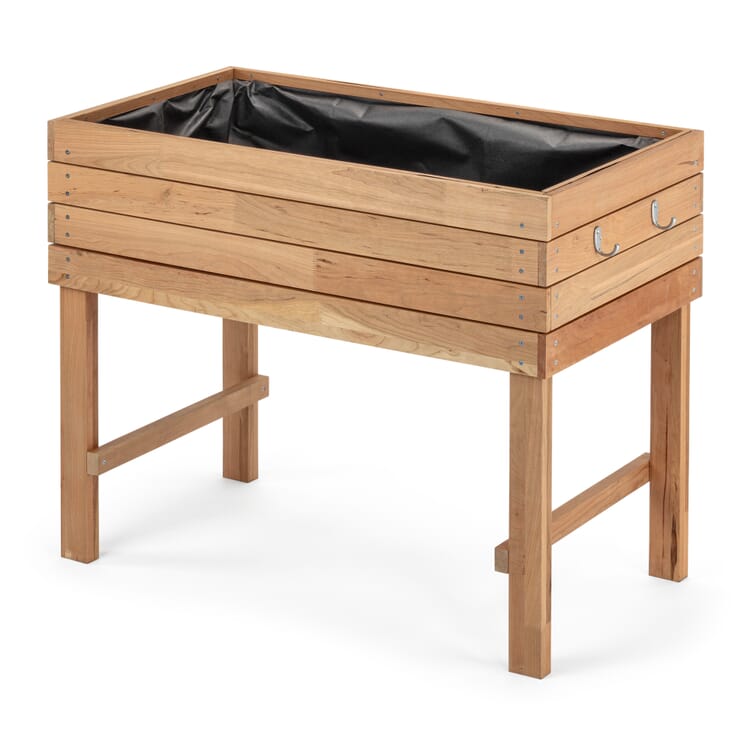

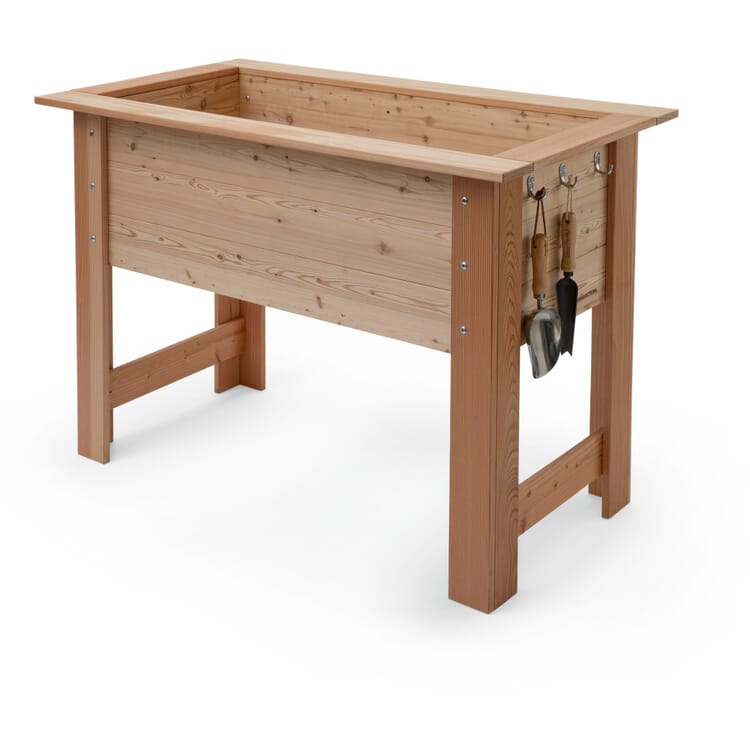

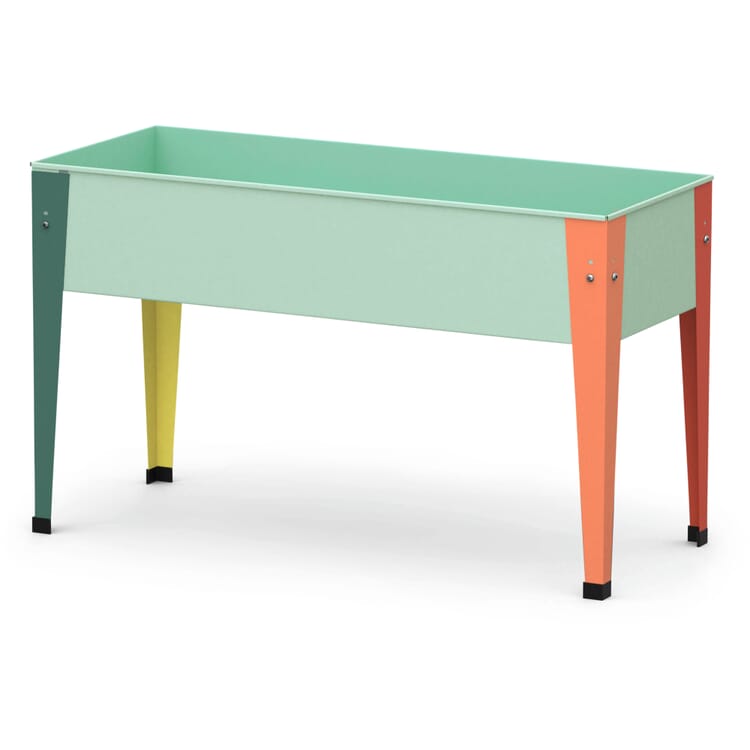


Choosing a location

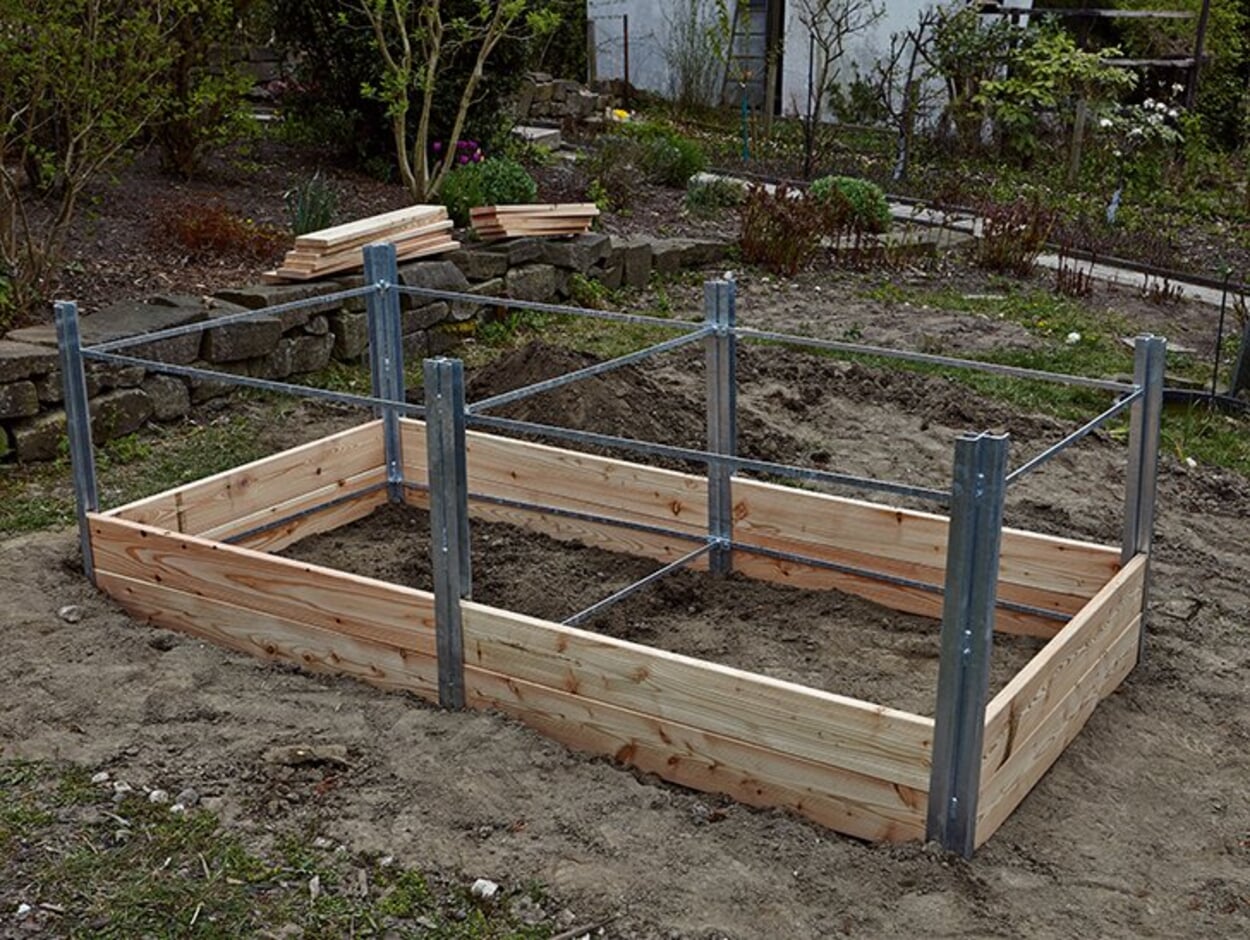
- Set up the raised bed in a suitable spot in the garden according to the assembly instructions; smaller versions can also be placed on a balcony or patio. For large raised beds, choose a location that allows access from all sides. Rectangular raised beds can be any length, but should not be wider than 1.2 m to ensure back-friendly maintenance.
- Choose a sunny spot or one that is shaded only for a few hours a day, as this is the ideal location for the vast majority of vegetables and herbs. The ideal orientation is with the long axis running east-west.
- If the raised bed is to be placed on a grassy area, first remove the topsoil from the interior and set the sod aside.
The correct filling

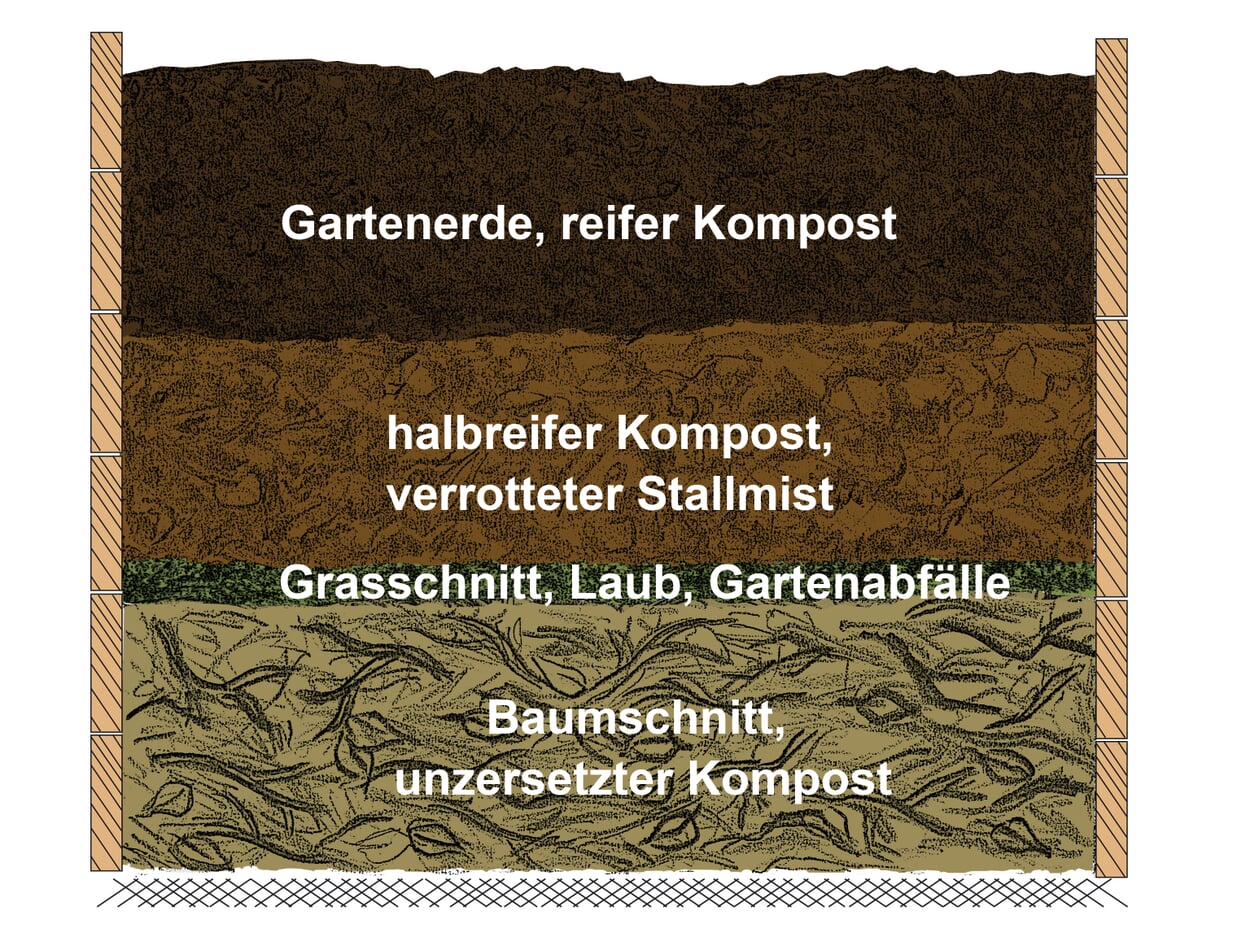
1st layer: Coarse materials (e.g., branches, twigs, undecomposed compost) for drainage. If the raised bed is in a garden with a high vole population, wire mesh is laid at the very bottom.
2nd layer: Turf, grass clippings, straw, leaves, or yard waste.
3rd layer: Semi-mature compost or well-rotted manure.
4th layer: Garden soil and fine compost.
Through the composting process, the contents of the raised bed slowly decompose, the volume decreases, and the soil settles. In the spring, this loss must be compensated for by topping off the bed with compost or vermicompost. Adding compost and earthworms also ensures that the soil in the raised bed is loosened up again. After about five to six years, all compostable material in the raised bed has decomposed—it must then be rebuilt.