Helpful tips
Create and green Benjes hedges


It is named after Hermann Benjes, who described it in the 1980s - he did not invent it. The Benjes hedge goes back to a long history of agriculture: farmers simply deposited their cuttings as a boundary marker between pasture and arable land, where they collapsed and gradually developed into one of those hedges that still characterize the image of many landscapes today. What starts out as dead wood soon comes to life: birds build their nests in it, hedgehogs find shelter, and it also provides protected winter quarters for a number of other animals that are usually very useful in the garden.
Through this lively activity, but also through the intervention of wind and weather, more and more seeds from the surrounding area accumulate. The hedge thus begins as a kind of blank habitat that is gradually colonized by animals and plants. How thoroughly they do this can be seen after just a few years. Such hedges also protect the land adjacent to them, on the one hand from wind, and on the other hand from flying seeds that end up in the hedge rather than as weeds in the field. Benjes hedges, even in smaller format, are always an active contribution to environmental and wildlife protection, they strengthen biodiversity and provide valuable refuge, at the same time they are attractive in their own way. Where there is no space for a whole hedge in smaller gardens, a very similar effect can be achieved with a so-called deadwood pile at the edge of the property.
Pile up a wall

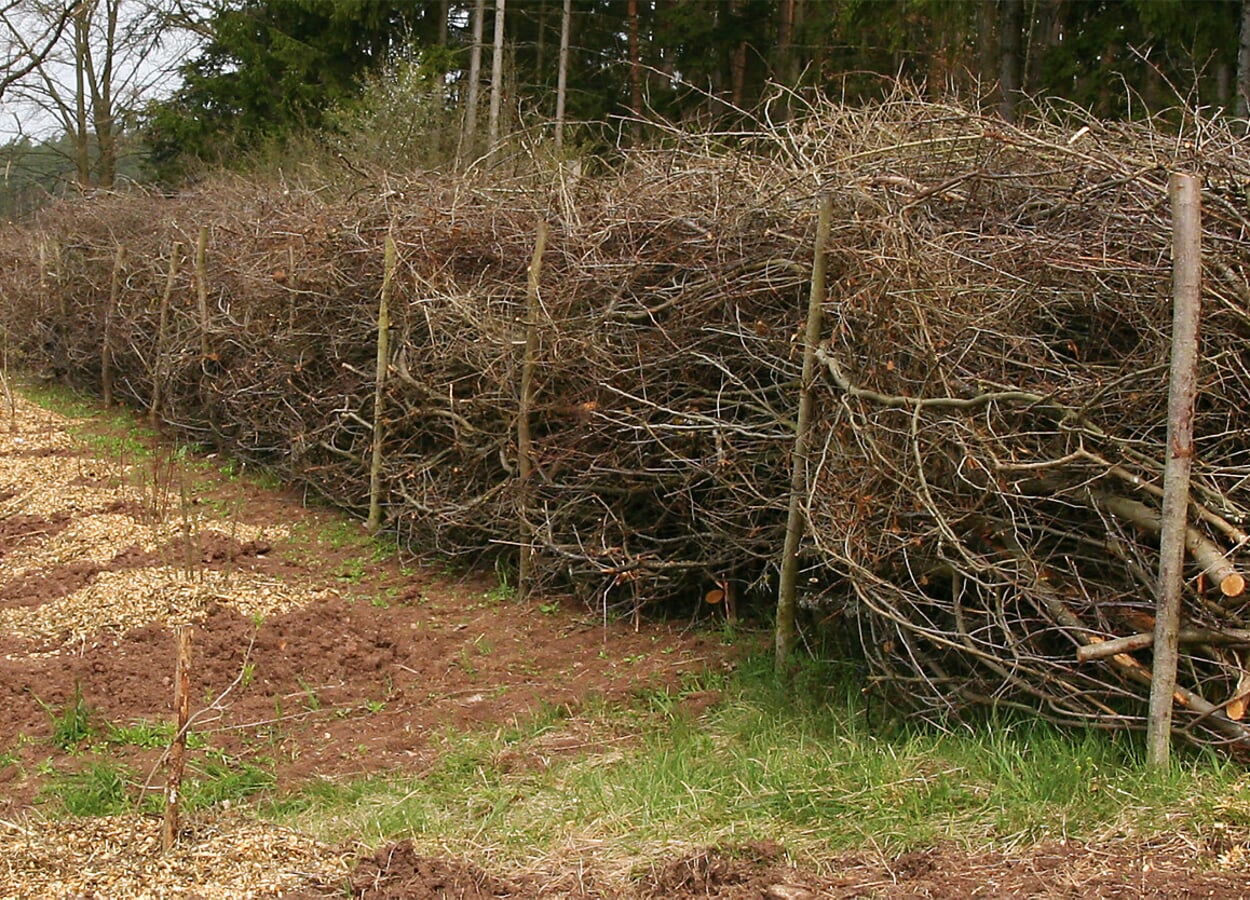
To create a Benjes hedge or a deadwood pile, it would basically be enough to keep piling up any prunings. In order not to let the soil become too acidic, you should use lumber from conifers rather sparingly. And because it greatly facilitates the work, especially for beginners, and gives the hedge a better shape, you can drive stakes in two rows for boundary and support. One every two meters, and depending on the desired width of the hedge at a distance of one meter or a little more the second row. Between them, you put the remnants of pruning, you can also add leaves and soil. As soon as the hedge sags a little, the next layer comes on top.
Jump start with wild shrubs
If some desirable native plants cannot establish themselves because they are not present in the area and therefore no seeds are brought in by wind or birds, help should be given by planting a native woody plant in the wall at irregular intervals. It will then not take so long for the hedge to grow and bloom on its own. Planted woody plants also make it firmer and more stable. And then you can watch in peace how the new hedge grows into the landscape and becomes part of it. In our plant assortment you will find numerous wild shrubs that are suitable for planting a Benjes hedge. You can find some examples here:





Recommended Topics

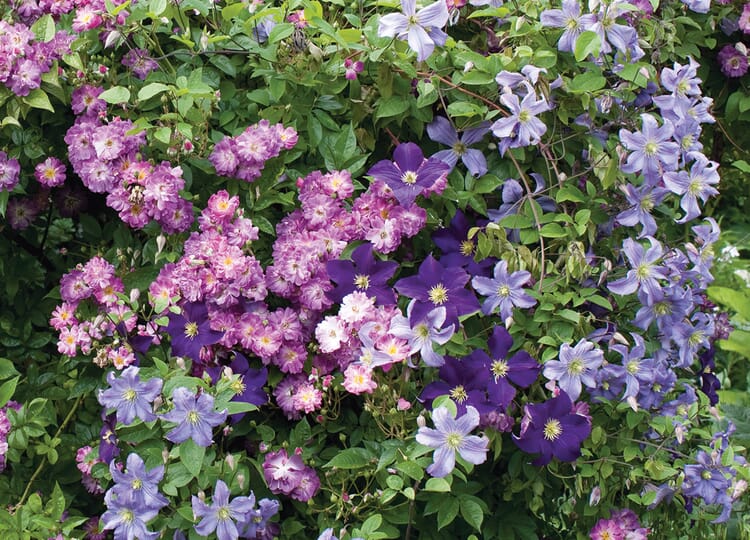
Many woody plants are quite unpretentious and give color and joy rather than quickly grow over the head of the garden owner. When choosing suitable plants should pay attention to good quality, the age of the plants, as well as the number of their shoots.
View more
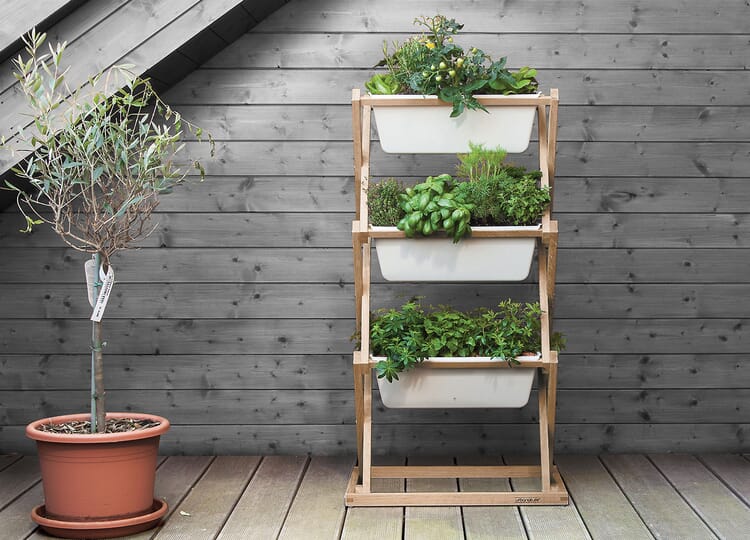
An urban dweller is not necessarily excluded from the possibility of gardening. Today, the inner-city wastelands that the urban garden guerrillas of earlier years so persistently opened up to us have long been used in a variety of ways by community gardening initiatives. Even those who have a balcony, however small, can enjoy the view of greenery and harvest their own vegetables and grow flowers in pots or tubs.
View more