Material
Robinia wood. The most weather resistant European wood


The black locust is a fast-growing, light-loving tree species with rather low soil requirements. It copes well with heat and drought and is therefore considered a tree of the future in climate change. The leaves of the robinia are similar to those of the acacia, and both tree species belong to the legume order (Fabaceae), which has given the robinia its Latin name "Robinia pseudoacacia". It is commonly known as "false acacia" or "false acacia". Initially cultivated mainly as an ornamental and avenue tree, Robinia has become an important commercial tree species in Europe in recent decades due to its natural durability and high mechanical characteristics. Most Robinia trees are cultivated in Hungary, followed by France and Romania. In Germany and Austria, the populations are still relatively small.
The properties of robinia wood
Black locust wood is one of the toughest and most valuable European timbers. Its technical and physical properties are very similar to those of oak—and in terms of bulk density, compressive strength, tensile strength, and bending strength, it even surpasses the robust oak. And its high weather resistance makes it virtually ideal for use in garden furniture construction and garden furnishings. The advantages in detail:
- Robinia wood is the most weather-resistant European wood and very durable. Compared to tropical woods—which Manufactum completely avoids using to protect the rainforest—it therefore represents a good and ecologically sound alternative, especially for outdoor use.
- Due to its high hardness and flexibility, black locust wood is exceptionally resilient and strong—qualities that are particularly advantageous in furniture making.
- Thanks to its high tannin content, even untreated black locust wood is resistant to rot and resistant to pest and fungal infestation.
- With its olive to golden-brown color, distinctive and vibrant grain featuring clearly visible growth rings, and its matte-silky luster, black locust wood is also aesthetically appealing.
- Over time, untreated black locust wood develops an elegant silver-gray patina. If you do not like the natural graying typical of this wood, you can counteract this effect with appropriate wood care oils.
The black locust is a true bee pasture. From May to June, it produces a multitude of white, particularly fragrant and nectar-rich flowers. Honey bees in particular are busy collecting nectar here, making the robinia very interesting for beekeepers: During the flowering period, they like to set up their bee colonies in the vicinity of this so-called bee-harvesting plant. However, the robinia honey produced in Germany, Austria and Switzerland is often sold as acacia honey, although, strictly speaking, true acacia honey comes from the acacia tree, which, however, grows mainly in subtropical to tropical regions and must therefore be imported. Some beekeepers have now recognized the trend towards regionality and offer their honey under the name "robinia honey". Characteristics of this pure blossom honey are its light yellow, transparent color and its mild, slightly floral taste. A special quality feature is that robinia honey remains liquid for a long time thanks to its high fructose content.


Recommended Topics

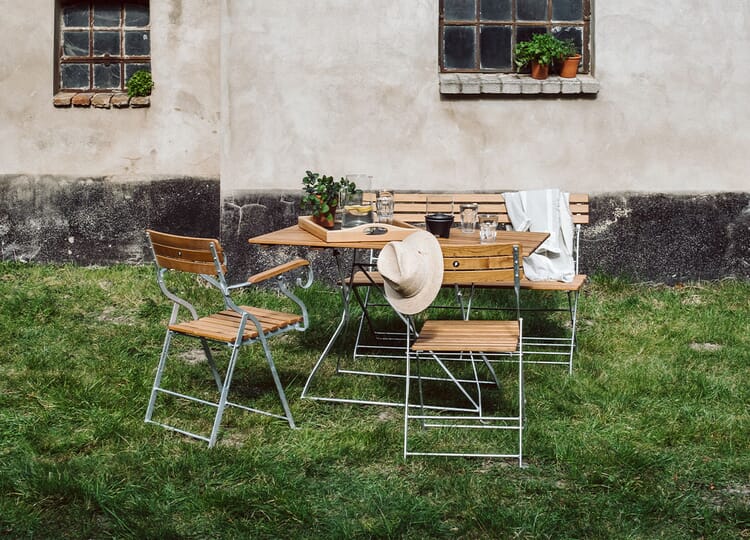
This garden furniture is usually used only in pubs and restaurants with outdoor catering: here it is a unique investment due to its robust workmanship - the chair will last for decades. For us, it is planked with weather-resistant Robinia wood. It is first coated with a pigmented primer, which among other things improves UV protection; then an intermediate sanding is carried out.
View more
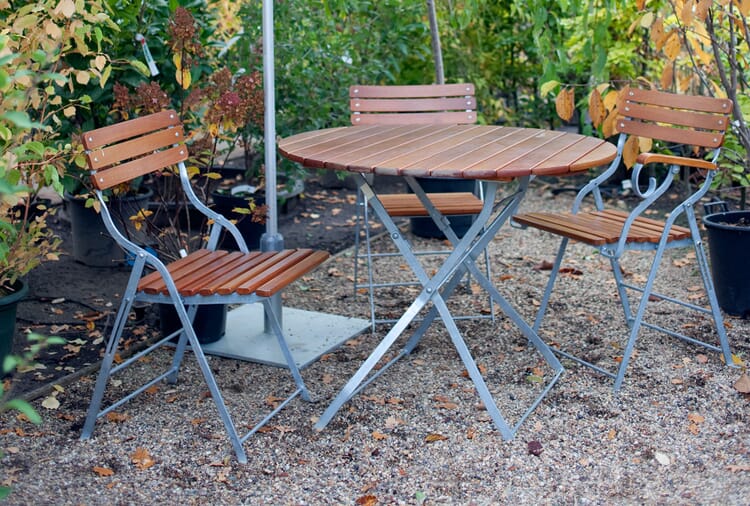
For our garden furniture we use domestic woods whose properties predestine them for rough outdoor use: Insensitive and defying the climate - like the woods of oak, larch and also silver fir, which are still known from facade, boat and water construction. The durable wood of the robinia, which is both strong and flexible, is also resistant to wood rot and is used, for example, to build playground equipment for public children's playgrounds.
View more
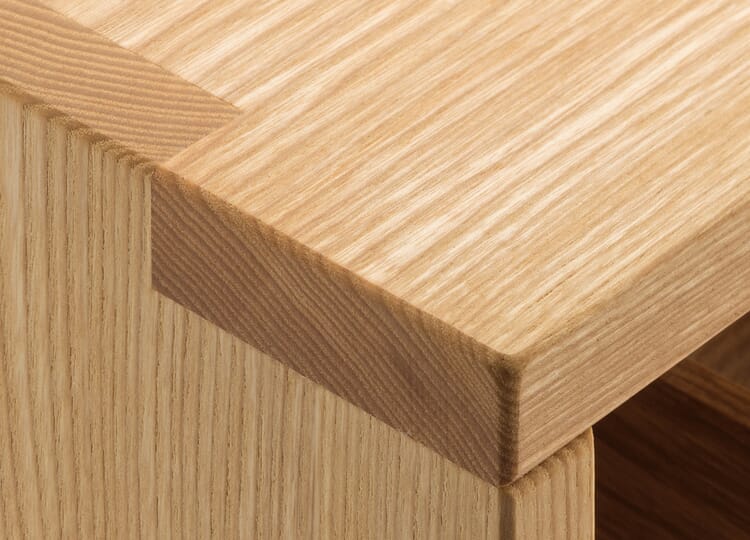
Ash wood is very long-fibered and one of the hardest and most load-bearing woods. In terms of strength and elasticity, it surpasses even the robust oak wood. In addition, it impresses with its color variability and its distinctive drawings. Not least because of this, ash wood is one of the most sought-after domestic wood species.
View more